

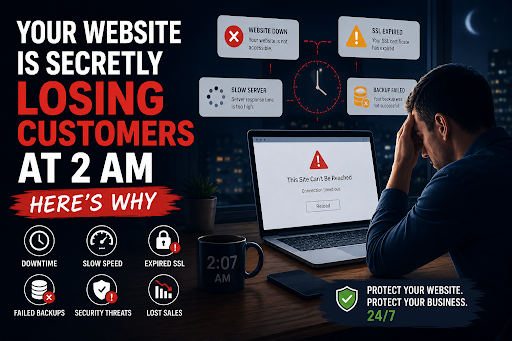
Your business may close its doors at the end of the day, but your website never stops working. While you’re asleep, potential customers may be searching for your products or services, submitting enquiries, or making purchases. If your website experiences hidden hosting issues during those hours, you could be losing valuable opportunities without ever knowing it.
Imagine it’s 2:07 AM. A customer finds your business on Google and clicks your website, ready to make a purchase. Instead of a fast-loading page, they encounter a website that won’t load, a browser security warning, or a checkout page that keeps spinning. Within seconds, they leave and visit a competitor instead.
These silent website problems don’t just affect visitors—they can also impact your search engine rankings, brand reputation, and long-term business growth. Understanding these issues is the first step toward preventing them.
Your website is more than an online brochure. It works around the clock by attracting visitors, generating leads, processing enquiries, and supporting your digital marketing efforts. Search engines also crawl your website at all hours to evaluate its performance and content.
Because your website operates 24/7, even a brief interruption can result in missed sales, frustrated visitors, and reduced visibility in search results.
Unexpected website downtime is one of the biggest reasons businesses lose potential customers. If your website becomes unavailable due to server failures, maintenance issues, network problems, or limited hosting resources, visitors simply move on to another website.
Downtime can lead to:
1. Lost sales and enquiries
2. Reduced customer trust
3. Poor user experience
4. Lower search engine visibility
Reliable hosting with high uptime monitoring helps minimise these risks and keeps your website available whenever customers need it.
Website speed has a direct impact on user experience. Most visitors expect pages to load within a few seconds. If your website is slow, many users leave before exploring your products or services.
Common hosting-related causes of slow websites include:
1. Overloaded shared servers
2. Limited server RAM and CPU resources
3. Poor server optimisation
4. Lack of caching
5. High server response times
A faster website improves visitor engagement, reduces bounce rates, and creates a better browsing experience.
Nothing discourages visitors faster than a browser warning that says, “Your connection is not private.” An expired SSL certificate can immediately make your website appear unsafe, even if everything else is functioning normally.
An SSL certificate helps encrypt data exchanged between your website and visitors, protecting sensitive information and building trust. Automatic SSL renewal and regular monitoring help prevent unnecessary security warnings and keep your website secure.
Website updates, plugin conflicts, accidental changes, or malware attacks can happen at any time. Without a recent backup, recovering your website can be time-consuming and expensive.
A dependable backup strategy should include:
1. Website files
2. Databases
3. Images and media
4. Configuration settings
Regularly testing backups is just as important as creating them, ensuring they can be restored when needed.
Cybercriminals use automated tools to scan websites continuously for vulnerabilities such as outdated plugins, weak passwords, and unsecured servers. Without proper security measures, your website may become an easy target.
A secure hosting environment should provide:
1. Malware scanning
2. Firewall protection
3. DDoS mitigation
4 .Automatic software updates
5.Continuous security monitoring
Strong security protects both your business and your customers.
Your visitors aren’t the only ones evaluating your website. Search engines regularly crawl websites to assess their performance. Frequent downtime, slow server responses, SSL errors, and server failures can make it more difficult for search engines to access your content, affecting your website’s overall SEO performance.
Reliable hosting infrastructure supports faster crawling, improved website performance, and a stronger foundation for long-term search visibility.
Your website may require attention if you notice:
1. Random slow loading times
2. Unexpected traffic drops
3. Frequent server errors
4. SSL security warnings
5. Website outages
6. Rising bounce rates
7. Failed contact forms
8. Plugin or update failures
Addressing these warning signs early helps prevent larger performance issues in the future.
A dependable hosting provider plays a vital role in your website’s performance. Hostagle offers reliable hosting infrastructure designed to keep websites fast, secure, and available around the clock.
With features such as high-performance hosting, automatic SSL support, daily backups, scalable resources, LiteSpeed-powered servers, proactive security measures, and expert technical support, Hostagle helps businesses reduce downtime and maintain a seamless online experience.
Your website represents your business every hour of every day. Hidden hosting issues such as downtime, slow loading speeds, expired SSL certificates, backup failures, and security vulnerabilities can silently cost you customers, leads, and revenue while you sleep.
Investing in reliable web hosting, proactive monitoring, regular backups, and strong website security ensures your website remains available whenever customers and search engines visit. With the right hosting partner, you can focus on growing your business with confidence, knowing your website is working for you 24/7.
Your website can lose customers due to hidden hosting issues such as slow loading speeds, server downtime, expired SSL certificates, security vulnerabilities, or poor website performance. Even if your website is accessible, these problems can negatively impact user experience and cause visitors to leave before taking action.
Website downtime prevents visitors from accessing your site, which can result in lost sales, missed enquiries, reduced customer trust, and potential SEO issues. Frequent downtime may also affect search engine crawling and reduce your website’s visibility in search results
Yes. Slow-loading websites often experience higher bounce rates because visitors expect pages to load quickly. Delays can frustrate users, reduce engagement, and lead to fewer enquiries, purchases, or sign-ups, ultimately affecting your business revenue.
An SSL certificate encrypts data exchanged between your website and visitors, protecting sensitive information and building trust. If an SSL certificate expires, browsers may display security warnings that discourage users from continuing to your website and can negatively impact search engine rankings.
Choose a reliable hosting provider that offers high uptime, automatic SSL renewal, regular website backups, proactive security monitoring, malware protection, and responsive technical support. Regular updates, performance monitoring, and website security checks also help ensure your website remains fast, secure, and accessible at all times.
Previous Blog
Start Submitting Your Website to Google Search Console Today to Boost Your Search Visibility and Traffic
Next Blog
Start Submitting Your Website to Google Search Console Today to Boost Your Search Visibility and Traffic